Bac Water And Syringes What happens if I inject BAC water?
\nWhat Happens If I Inject BAC Water? A Real-World Safety and Quality Guide
\n\n \nIn recent years, the self-directed wellness and performance optimization spaces have exploded. A growing demographic of men aged 25 to 34 are taking control of their health via peptide protocols, hormone optimization, and specialized fitness research. Consequently, forums and search trends are flooded with fundamental preparation questions. Among the most frequent yet misunderstood queries is: what happens if I inject BAC water? Whether someone accidentally injected it plain or is highly anxious about using it as a mixing agent for their lyophilized compounds, understanding the baseline physiological reality is essential.
\nThe intent behind searching for this topic usually stems from a mix of caution and curiosity. Some users have experienced an unexpected burning sensation at a subcutaneous injection site and want to know if they have done permanent damage. Others are assessing the risks of choosing cheap, unverified underground supplies versus premium, independently tested alternatives. This objective guide will break down the exact science, outline real-world experiences, and provide a strict quality framework to separate clinical-grade preparation from dangerous shortcuts.
\n\n \nWhat Bacteriostatic Water Is and Who It Might Fit Best
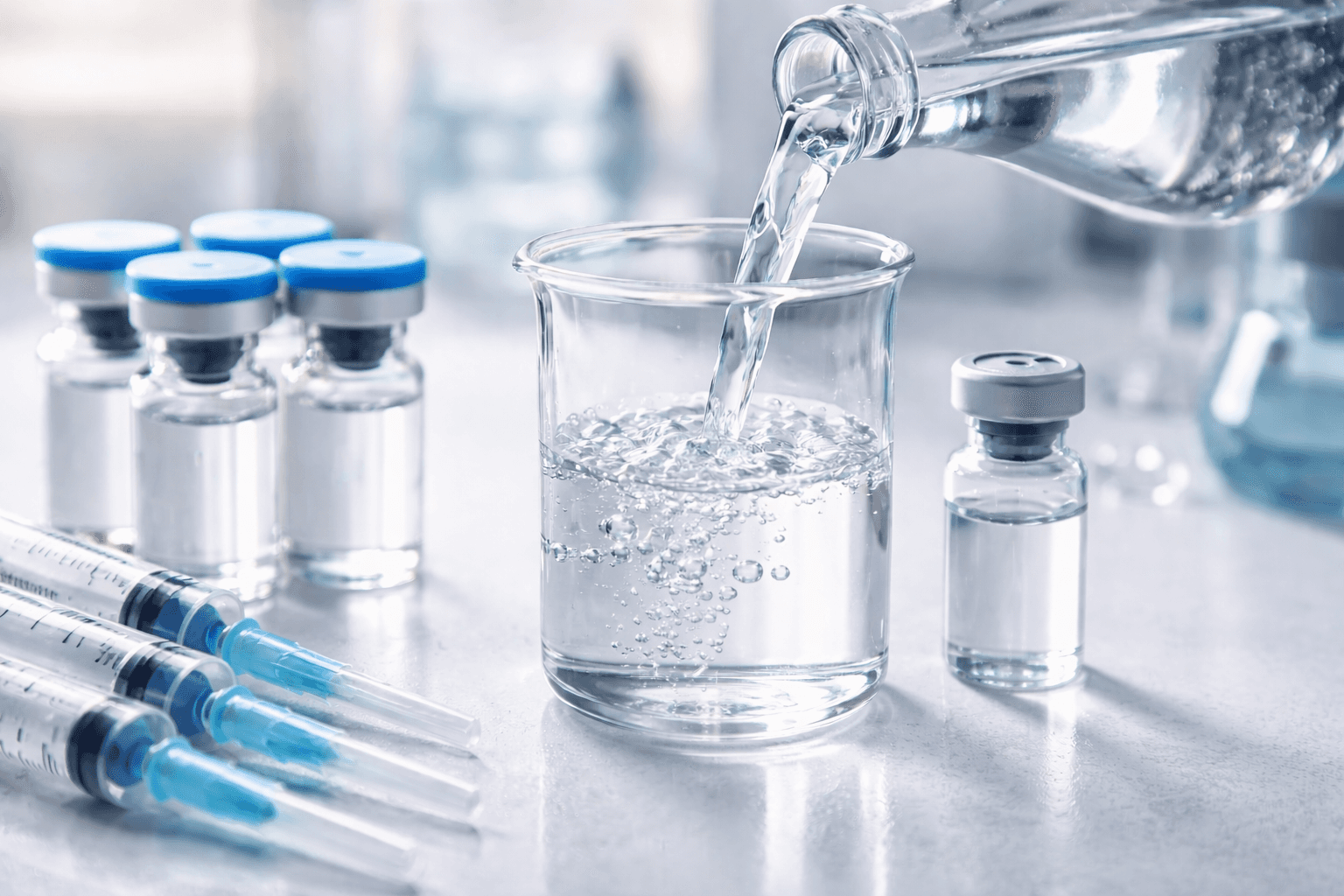
\nBacteriostatic water—commonly abbreviated as BAC water—is a sterile, non-pyrogenic preparation of water for injection containing 0.9% ($0.009$) benzyl alcohol added as a bacteriostatic preservative. This specific chemical composition allows the solution to be drawn from multiple times over a designated period (typically up to 28 days) because the alcohol actively inhibits the replication and growth of most potentially contaminating bacteria.
\nIt is crucial to differentiate BAC water from its close relatives: sterile water for injection (which contains no preservative and must be discarded after a single use) and sterile normal saline (which contains 0.9% sodium chloride). In the context of performance optimization and DIY health tracking, BAC water fits best for individuals who are utilizing multi-dose vials of lyophilized (freeze-dried) compounds. If you are a consumer meticulously managing your own research protocols with peptides or custom hormone formulations, BAC water is an indispensable utility fluid designed to maintain sterility across multiple micro-doses.
\nHowever, it is not a one-size-fits-all fluid. It is explicitly not intended for large-volume intravenous infusions because benzyl alcohol can introduce systemic toxicity when metabolized in massive quantities. For the typical 25-34 fitness enthusiast operating with small subcutaneous or intramuscular volumes, it serves as the standard medium—provided the quality of the water is verified and the user\'s technique is immaculate.
\n\n \nPractical Benefits and Where It Falls Short
\nWhen used correctly as a diluent, BAC water provides massive practical benefits for shelf-life longevity and cost efficiency. Without a bacteriostatic agent, a reconstituted peptide vial would become a breeding ground for microbes within 24 to 48 hours, forcing you to discard expensive compounds. The 0.9% benzyl alcohol content extends that operational window significantly, giving users peace of mind during multi-week cycles.
\nHowever, where it falls short is in its potential for localized tissue irritation. To understand what happens if I inject BAC water, we look closely at how the body reacts to benzyl alcohol. Even at a low concentration, benzyl alcohol is a mild local irritant. If injected completely alone, or in a localized area with high nerve density, it can trigger a sharp, transient stinging sensation.
\n \n\n Case Study 1: The Successful Reconstitution (Positive Experience)\n\n
\n Marcus, a 29-year-old amateur athlete, utilized premium-grade BAC water to reconstitute a 5mg vial of a popular recovery peptide. Over a 10-day period, he administered 250mcg subcutaneous injections daily using a 31-gauge insulin syringe. Because he utilized a certified USP-grade bacteriostatic solution and kept the vial refrigerated at 4°C, he experienced zero localized redness, minimal to no stinging, and the compound remained completely clear and sterile throughout its use.\n
\n Case Study 2: The Plain Injection Mistake (Negative Experience)\n\n
\n Liam, a 31-year-old biohacking hobbyist, confused his vials during a rushed morning routine and accidentally drew 0.5mL of plain, unmixed research-grade BAC water, injecting it subcutaneously into his abdominal fat. Within seconds, Liam experienced a intense, localized burning sensation rated at a 4/10 on the pain scale. Within an hour, a raised, red welt about the size of a dime developed at the injection site. Because the fluid lacked an osmotic buffer (like a peptide mass or saline balance) and contained raw benzyl alcohol, it caused localized cell dehydration and irritation. The redness subsided after 36 hours, but it served as a stark reminder of what happens if you inject bacteriostatic water without proper preparation.\n
 \n
\n What Research Suggests and What It Doesn\'t
\nClinical data regarding benzyl alcohol preparations highlights a strict safety threshold. In small volumes typical of subcutaneous (Sub-Q) or intramuscular (IM) delivery—ranging from 0.1mL to 1.0mL per injection—the human liver rapidly metabolizes benzyl alcohol into benzoic acid, which is then conjugated with glycine in the liver and excreted as hippuric acid via the kidneys. This metabolic pathway is highly efficient in adults, meaning systemic toxicity from micro-injections is virtually non-existent in healthy individuals.
\nHowever, science does not suggest that BAC water is completely benign under all circumstances. First, there is the issue of tonicity. Pure water is hypotonic relative to human intracellular fluid. When a hypotonic solution containing an irritant like benzyl alcohol is injected directly into tissue, water molecules rush into the surrounding tissue cells via osmosis, causing them to swell and potentially rupture (a process known as hemolysis when occurring in blood cells). This is precisely what triggers the burning sensation when asking what happens if I inject BAC water plain.
\nFurthermore, medical research explicitly warns against using bacteriostatic water in newborns or intrathecal/epidural spaces. Benzyl alcohol is a known neurotoxin at high concentrations; introducing it anywhere near the spinal cord or brain can cause permanent nerve damage. For the consumer market, it is vital to know that research does not support the use of BAC water for diluting large-volume IV drips. Keep it strictly to small-volume localized injections, and never assume that a "research-grade" label offers the same physiological tolerance as a strictly manufactured USP-grade product.
\n\n \nIngredients, Formats, and Quality Signals
\nWhen shopping for or evaluating bacteriostatic water, you must look closely at the ingredient list and manufacturing standard labels. A legitimate product will feature incredibly simple but strictly controlled components. Let us look at what makes up a proper bottle:
\n- \n
- High-Purity Sterile Water: Filtered and distilled to remove all dissolved solids, endotoxins, and microbial life. \n
- 0.9% Benzyl Alcohol ($C_7H_8O$): The exact concentration required to arrest bacterial replication without destroying the structure of reconstituted proteins or causing systemic human poisoning. \n
The marketplace generally offers two primary formats: USP-Grade (United States Pharmacopeia) and Research-Grade / Lab-Use-Only. USP-grade products are manufactured in FDA-inspected, current Good Manufacturing Practice (cGMP) compliant facilities. They feature rigorous testing for endotoxin levels and exact pH balances (typically between 4.5 and 7.0). Research-grade water, frequently sold online via peptide vendors, may look identical but bypasses these strict oversight pathways. Buying unverified variants significantly changes the risk profile of what happens if you inject bacteriostatic water, introducing the potential for pyrogenic reactions (fever-inducing bacterial fragments) or incorrect alcohol percentages that could damage your expensive compounds.
\n\n \nComparison of Common Options
\nTo help visualize how bacteriostatic water stacks up against alternative mixing liquids you might encounter, evaluate the following comprehensive comparison table:
\n\n| Format | \nTypical Dose/Use | \nPros | \nCons | \nCost | \nBest For | \n
|---|---|---|---|---|---|
| USP Bacteriostatic Water | \n0.1mL - 1.0mL per injection; multi-dose up to 28 days | \nInhibits bacterial growth; highly stable; strict cGMP quality control | \nCan cause mild stinging due to 0.9% benzyl alcohol | \n$15 - $25 per 30mL vial | \nMulti-dose peptide and hormone reconstitution protocols | \n
| Research-Grade BAC Water | \n0.1mL - 1.0mL per injection; multi-dose claims | \nEasily accessible online; no prescription required | \nVarying quality control; risk of high endotoxins or incorrect pH | \n$8 - $12 per 30mL vial | \nBudget-constrained in-vitro laboratory bench work | \n
| Sterile Water for Injection | \nSingle-use only; immediate disposal after opening | \nZero localized stinging; no preservative additives | \nNo antimicrobial defense; must discard remainder instantly | \n$2 - $5 per 10mL ampoule | \nSingle, immediate high-volume or immediate-use doses | \n
| Sterile Normal Saline (0.9% NaCl) | \nSingle-use or specific multi-dose iv/sub-Q preparation | \nIsotonic to human tissue; extremely comfortable injection | \nCan cause rapid degradation or precipitation of certain fragile peptides | \n$3 - $7 per ampoule/vial | \nBasic hydration or compounds specifically compatible with sodium chloride | \n
| DIY Boiled/Filtered Water | \nNever acceptable for injection pathways | \nExtremely low cost | \nHigh risk of severe bacterial infection, abscesses, and systemic sepsis | \nVirtually $0 | \nAbsolutely nothing (Avoid entirely) | \n
Buying Framework and Red Flags
\nNavigating the internet for mixing utilities requires a critical mindset. If you are purchasing BAC water online, do not blindly trust the first result on a search engine. Use this strict buying framework to ensure you aren\'t injecting substandard materials.
\n \nThe Smart Buyer\'s Checklist:
\n- \n
- Verify Third-Party Testing: Look for vendors that provide batch-specific Certificates of Analysis (CoA). A real CoA will show a clear purity score, test for heavy metals, and confirm an exact 0.9% benzyl alcohol content. \n
- Inspect the Cap and Seal: Genuine medical-grade vials always feature a flawless flip-off plastic cap protecting a sterile, intact rubber stopper underneath. If the cap arrives loose or spinning freely, discard it immediately. \n
- Check the Material Expiration Date: Unopened vials typically have a shelf life of 1.5 to 2 years from production. Avoid blowout clearance sales of inventory that expires within the month. \n
Critical Red Flags to Watch For:
\nIf a website lists products as "Bacteriostatic Water" but features typos on the label, lacks a physical company address, or lists ingredients simply as "purified water" without explicitly declaring the benzyl alcohol percentage, close the tab. Another huge red flag is glass ampoules labeled as bacteriostatic. Because bacteriostatic water is designed for multi-dose use, it almost exclusively comes in rubber-stoppered vials. A snap-off glass ampoule cannot be resealed cleanly, meaning it\'s highly likely standard sterile water mislabeled by an irresponsible vendor.
\n\n \n
\n Common Mistakes and How to Avoid Them
\nEven with high-grade supplies, user error during administration can yield uncomfortable side effects or ruin your compounds. Let\'s look at the three most common mistakes committed by the 25-34 age group:
\n \n1. Injecting Too Fast: Because benzyl alcohol is a mild irritant, pushing 0.5mL or more of a solution into subcutaneous tissue in under two seconds stretches the local cells and concentrates the alcohol in one tiny pocket. This dramatically worsens the burning sensation. The Fix: Inject the fluid slowly and steadily over 5 to 10 seconds, allowing surrounding tissue to distribute the liquid naturally.
\n \n2. Forgetting the 28-Day Clock: Many people assume that because it is "bacteriostatic," the vial stays sterile forever once punctured. This is false. The benzyl alcohol slowly degrades, and repeated needle punctures introduce micro-traces of air contaminants. The Fix: Write the exact date of your first puncture directly on the vial\'s label with a permanent marker. Toss the vial exactly 28 days later, regardless of how much liquid is left inside.
\n \n3. Violating Temperature Rules: Leaving reconstituted vials or your stock BAC water in a hot gym bag or under direct sunlight destroys both the preservative action of the alcohol and the structural integrity of your active peptides. The Fix: Store all opened vials securely in a clean, dedicated container inside your refrigerator at a steady 2°C to 8°C (36°F to 46°F).
\n\n \nFAQ
\n \nIs it proven that BAC water safely preserves peptides over multiple weeks?
\nYes, clinical data and pharmaceutical manufacturing protocols widely prove that a 0.9% benzyl alcohol solution effectively arrests the growth of gram-positive and gram-negative bacteria for up to 28 days when stored at appropriate cool temperatures. This makes it the gold standard for reconstituting multi-dose lyophilized vials.
\n\nHow long does it take for a stinging sensation to fade after a BAC water injection?
\nIf you experience a transient sting from the benzyl alcohol, it typically peaks within 30 seconds of administration and completely fades within 2 to 5 minutes. If localized redness or a minor bump forms due to tissue volume stretching, it usually resolves on its own within 24 to 36 hours.
\n\nWhat are the immediate side effects if I accidentally inject contaminated water?
\nInjecting non-sterile, contaminated water can cause serious localized or systemic health complications. Immediate signs include severe, throbbing pain at the site, swelling that expands over hours, heat radiating from the skin, and a high fever or chills. This requires urgent professional medical evaluation to prevent a localized abscess from turning into systemic sepsis.
\n\nCan it combine with all types of performance or health optimization powders safely?
\nWhile BAC water is highly compatible with the vast majority of water-soluble lyophilized peptides and small proteins, it cannot combine with every compound. Certain highly delicate proteins can precipitate or denature in the presence of benzyl alcohol. Always consult the specific manufacturer data sheet for your compound to verify whether BAC water or normal saline is the recommended diluent.
\n\nWhat are the true differences between oral vs injection/alternative administration of reconstituted compounds?
\nThe choice between oral vs injection pathways comes down to bioavailability. Most compounds reconstituted with BAC water are peptides or proteins. If taken orally, the harsh enzymes and hydrochloric acid in the human stomach instantly break down these molecular chains into basic amino acids, rendering them completely useless before they reach the bloodstream. Subcutaneous or intramuscular injection bypasses the digestive tract entirely, delivering the active compound directly to systemic circulation for maximum therapeutic action.
\n\n \nA Practical 2-Week Experiment Framework
\nIf you are introducing a new compound or a new source of bacteriostatic water into your health routine, tracking your body\'s localized response systematically is an smart way to catch quality issues early. Below is an objective logging framework to evaluate tolerance over a standard two-week cycle.
\n\nPhase 1: Days 1 to 3 – The Baseline Evaluation
\nAdminister your reconstituted solution according to your standard scheduled timing. Immediately following the injection, sit quietly for 5 minutes and log the immediate sensory feedback. Rate any stinging on a 1-10 scale. Check the site again at the 1-hour and 12-hour marks to note if any induration (hardening) or erythema (redness) occurs. If a significant welt forms from a tiny 0.1mL injection, it signals a potential issue with the pH or purity of your mixing fluid.
\n\nPhase 2: Days 4 to 7 – Rotation Control
\nTo avoid confounding your data with tissue fatigue, strictly rotate your injection sites by at least two inches every day (e.g., alternating quadrants of abdominal fat or moving from left to right thighs). Note whether the transient sting is consistent or if it only happens in specific anatomical locations. If the stinging disappears when switching locations, the initial discomfort was likely due to hitting a superficial nerve cluster rather than an issue with the BAC water itself.
\n\nPhase 3: Days 8 to 14 – Compound Stability Check
\nBy the second week, your reconstituted vial has been repeatedly punctured and exposed to temperature shifts during handling. Closely inspect the vial under direct light before drawing your dose. Is the liquid still 100% crystal clear, or has it developed a cloudy, milky hue? A loss of clarity or visible floating particulates indicates that the preservative has failed or the compound has degraded. If it passes the visual test and your localized skin reactions remain minimal and stable, your preparation protocol and fluid quality are successfully holding up.
\n\n \nAbout the Author
\nEthan Vance is a veteran independent laboratory analyst and consumer health advocate specializing in compound purity, biochemical assays, and self-directed health optimization protocols. With over eight years of hands-on experience evaluating health technologies, lab equipment, and preparation supplies, Ethan cuts through marketing hype to deliver rigorous, data-first perspectives for discerning consumers.
\n \nDisclaimer: This article is intended strictly for educational, informational, and search optimization purposes. It does not constitute professional medical advice, diagnosis, or treatment. Reconstituting and injecting substances carries inherent health risks. Always consult with a qualified physician or licensed healthcare provider before initiating any new injection protocol or introducing self-administered wellness compounds into your routine.
\n
Discussion