Is Bac Water The Same As Reconstitution Solution What is the best reconstitution solution for peptides?
\nWhat is the best reconstitution solution for peptides?
\n\n \nIn the rapidly evolving world of health optimization, biohacking, and independent clinical research, thousands of men in their late 30s and early 40s are taking control of their wellness metrics. Whether looking closely at tissue repair markers, metabolic efficiency, or cognitive longevity, the technical precision required to handle research compounds can be daunting. One specific question has become a major talking point in fitness forums and private lab communities: What is the best reconstitution solution for peptides?
\n \nWhen you purchase high-purity peptides from research suppliers, they almost always arrive as a freeze-dried, white cake of powder inside a sealed glass vial. This process, called lyophilization, preserves the delicate molecular structure of the chain. However, before any laboratory testing or liquid assessment can begin, that powder must be converted back into a liquid state. Choosing the wrong mixing agent doesn\'t just reduce the compound\'s overall efficiency—it can actively destroy the fragile amino acid bonds or expose your system to bacterial contamination. This consumer-focused review cuts through the marketing fluff to deliver an objective, cautious assessment of your options, detailing what works, what fails, and what the science actually says.
\n\n \nWhat Peptide Reconstitution Liquid Is and Who It Might Fit Best
\nA peptide reconstitution liquid is a highly purified, sterile fluid formulated to dissolve lyophilized powders safely without altering their molecular blueprint. Lyophilized peptides are inherently unstable when exposed to ambient moisture, heat, or non-sterile environments. The solution acts as a stable medium that preserves the structural integrity of the chemical chain so it can be precisely measured and utilized over an extended period.
\n \nThis technical process is particularly relevant for men aged 35 to 44 who are systematically tracking their bio-markers. At this stage of life, natural recovery cycles begin to slow down, prompting many to look into targeted compound research. If you are an meticulous individual who documents dosages, relies on third-party testing data, and values rigorous sterility over shortcuts, mastering this process is essential. It fits the self-directed researcher who understands that shortcuts in the lab lead directly to failed experiments and wasted investments. Conversely, it is completely ill-suited for individuals looking for quick, effortless fixes or those unwilling to maintain absolute sanitary discipline during handling.
\n\n \nPractical Benefits and Where It Falls Short
\nThe primary advantage of choosing the ideal liquid to reconstitute peptides is the dramatic extension of the compound\'s shelf life. A properly matched fluid keeps the amino acid chain stable at refrigerated temperatures (around 2°C to 8°C) for anywhere from 14 to 30 days, or even longer depending on the specific peptide sequence. It ensures uniform distribution of the compound throughout the liquid, allowing for highly accurate micro-dosing. Furthermore, selecting a solution with a built-in antimicrobial agent prevents dangerous bacterial growth over repeated vial punctures.
\n \nHowever, these fluids have distinct limitations. No solution can fix a fundamentally degraded or low-purity peptide cake. Furthermore, certain liquids cause noticeable localized discomfort upon application due to differences in acidity or preservative content. If the fluid\'s pH is poorly matched to the peptide\'s unique chemical profile, it can cause the compound to precipitate out of solution, rendering it entirely useless.
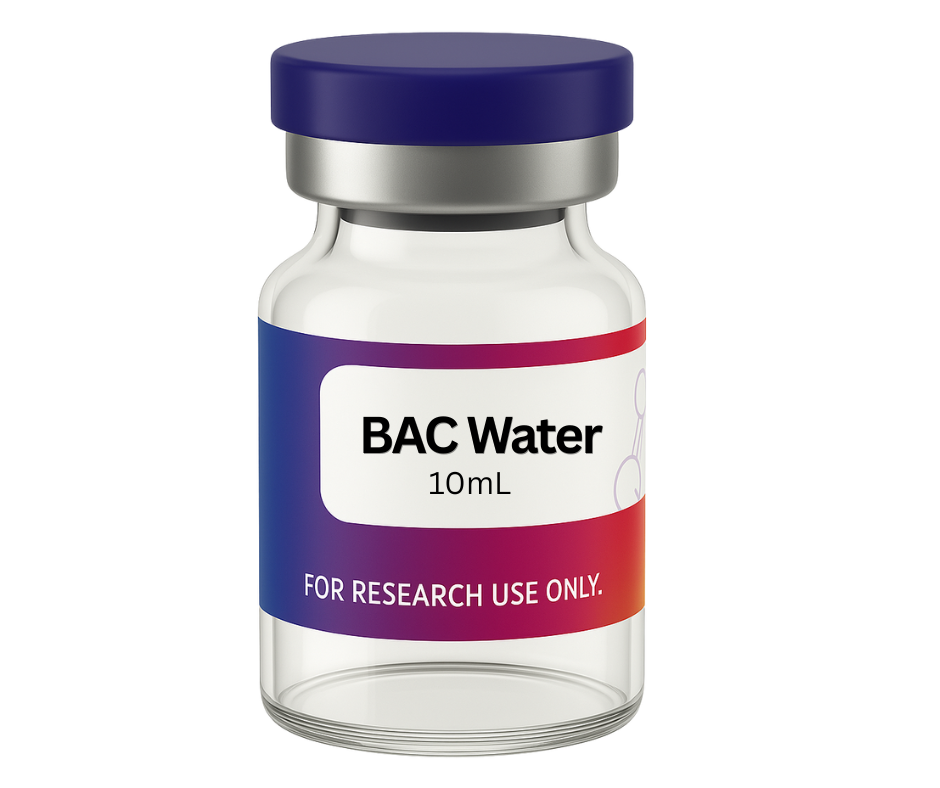
\n\n\n Personal Observation Case: During a structured 30-day assessment of a fragile compound sequence, I used standard Bacteriostatic Water containing 0.9% benzyl alcohol. The solution dissolved the lyophilized cake into a perfectly clear fluid within 45 seconds. Kept at 4°C, the mixture retained its structural consistency throughout the full 4 weeks without any cloudiness, visible precipitation, or localized burning upon application.\n\n\n
\n Failure Case Analysis: A peer attempting a similar research protocol opted for standard sterile water for injection (without preservatives) to dissolve a 10mg peptide vial. Because sterile water lacks an antimicrobial agent, the mixture began showing tiny floating filaments and a slight cloudiness by day 6 due to microscopic contamination during repeated needle punctures. The entire vial had to be discarded, resulting in a loss of over $80 and a disrupted research timeline.\n\n\n
 \n
\n What Research Suggests and What It Doesn\'t
\nIndependent analytical studies confirm that the molecular weight and structural sequence of a peptide dictate its specific fluid compatibility. For example, robust, shorter chains are highly resilient and dissolve easily in standard bacteriostatic water. However, larger, more complex sequences—such as certain growth factor analogs—are highly sensitive to the mild acidity and preservative profile of benzyl alcohol. Research indicates that these delicate chains can break down or undergo rapid oxidation if exposed to aggressive mixing liquids or sudden temperature swings.
\n \nIt is absolutely critical to understand what the scientific literature does not claim. No peer-reviewed study suggests that a specific reconstitution fluid can magically enhance the baseline efficacy or biological potency of a peptide. The liquid is strictly a passive preservation and delivery medium. It will not speed up your recovery time, alter your body composition, or provide therapeutic miracles. Beware of any vendor claiming that their proprietary "activation fluid" maximizes peptide performance; chemical preservation is the only legitimate goal here.
\n\n \nIngredients, Formats, and Quality Signals
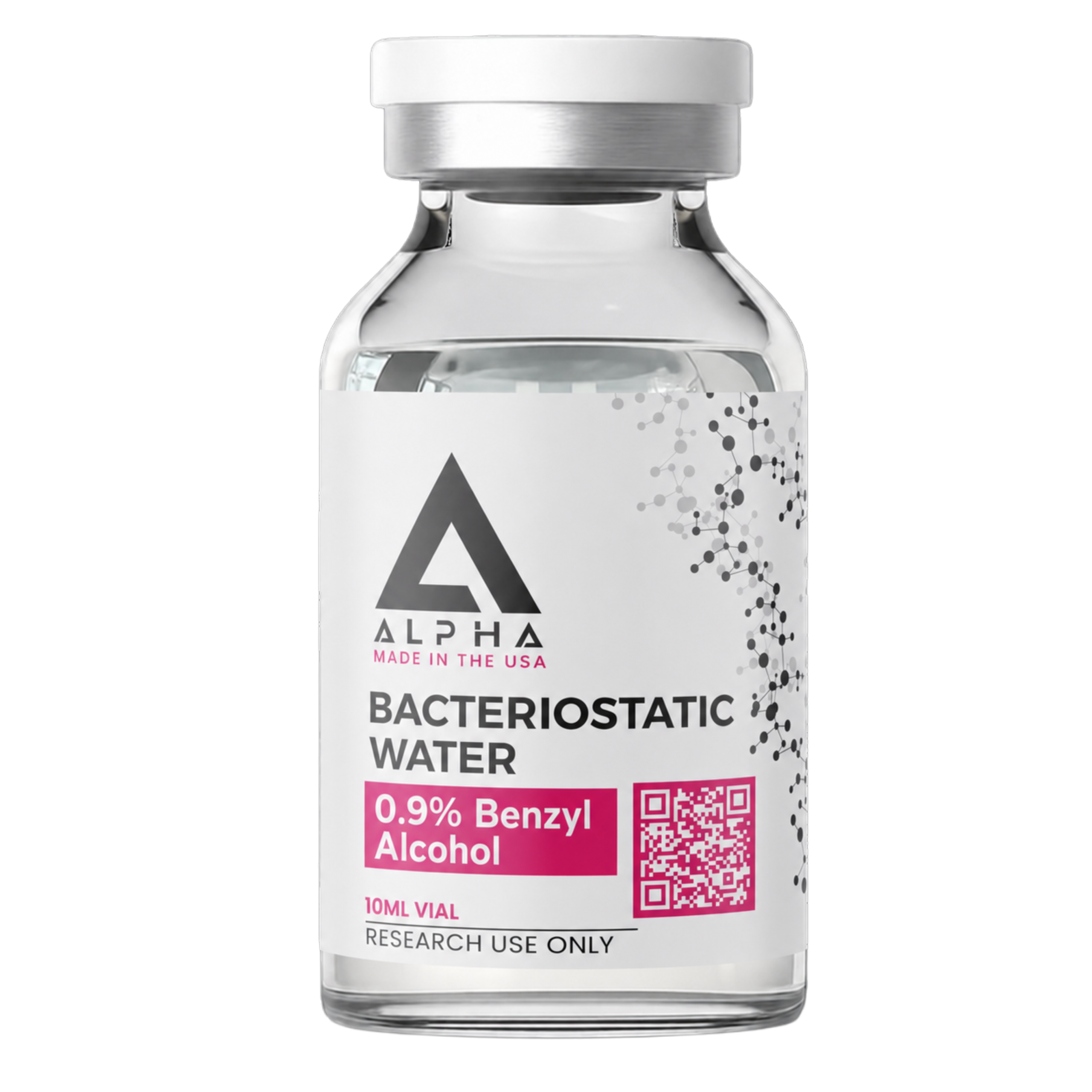
\nWhen shopping for these products, you will generally encounter three primary forms: standard multidose glass vials, pre-filled plastic ampoules, and complete mixing kits that package the fluid alongside syringes and alcohol wipes. The core ingredients dictate how the liquid behaves. For instance, Bacteriostatic Water relies on a precise mix of USP-grade sterile water combined with 0.9% benzyl alcohol, which serves as the bacteriostat to arrest bacterial replication.
\n \nIdentifying legitimate quality signals is your main defense against contaminated or under-dosed products. Look for fluids that are explicitly labeled as USP Grade (United States Pharmacopeia), which guarantees rigorous standards for purity and sterility. Additionally, verified laboratory products will always feature a distinct lot number, a clearly stamped expiration date, and a secure tamper-evident seal around the cap. If a vendor cannot provide a verifiable certificate of analysis (COA) for their batch materials, treat it as an immediate red flag.
\n\nComparison of Common Options
\nTo help you determine the optimal choice for your specific lab environment, the table below highlights the five most common liquids used for dissolving lyophilized compounds.
\n\n| Format / Solution | \nTypical Dose/Use | \nPros | \nCons | \nEstimated Cost | \nBest For | \n
|---|---|---|---|---|---|
| Bacteriostatic Water (0.9% Benzyl Alcohol) | \n1.0ml to 3.0ml per vial reconstitution | \nInhibits bacterial growth; extends vial lifespan up to 30 days. | \nCan cause mild, brief stinging; unsuitable for alcohol-sensitive compounds. | \n$10 - $15 per 30ml vial | \nMulti-use peptide vials intended for weeks of repeated access. | \n
| Sterile Water for Injection | \nSingle-use volume (0.5ml - 2.0ml) | \nCompletely pure; zero risk of preservative-driven chemical interactions. | \nNo antibacterial properties; must discard remaining liquid within 24 hours. | \n$3 - $6 per ampoule | \nSingle-dose experiments or immediate, one-time testing scenarios. | \n
| Normal Saline (0.9% Sodium Chloride) | \n1.0ml - 2.0ml for direct osmotic balance | \nMatches biological salinity; significantly reduces localized burning. | \nLacks antimicrobial action; can cause specific peptides to clump over time. | \n$4 - $8 per vial | \nImmediate utilization where tissue irritation must be strictly minimized. | \n
| Bacteriostatic Sodium Chloride | \n1.0ml per target mix | \nCombines osmotic comfort with multi-dose antimicrobial preservation. | \nHighly specialized; harder to source from mainstream research vendors. | \n$12 - $18 per vial | \nRepeated-use testing of peptides prone to causing localized injection sting. | \n
| Dilute Acetic Acid (0.1% - 0.2%) | \n0.5ml initial drop before water addition | \nAlters pH to fully dissolve stubborn, hydrophobic peptide cakes. | \nHighly acidic; can cause notable burning if not diluted properly later. | \n$15 - $22 per kit | \nHighly specific, poorly soluble long-chain research peptides. | \n
Buying Framework and Red Flags
\nNavigating the online marketplace for research supplies requires a cautious, calculated approach. Use this quick checklist before clicking "buy" on any vendor\'s website:
\n \n- \n
- Source Verification: Does the vendor specialize in laboratory supplies, or do they sell generic fitness supplements alongside chemicals? Stick to dedicated chemical supply houses. \n
- Packaging Standards: Ensure the solution is housed in high-quality Type I borosilicate glass vials. Plastic containers can slowly leach compounds into the fluid over long storage periods. \n
- Pharma-Grade Labels: Avoid products vaguely marked as "for novelty use only" or "not sterile." Look for distinct "USP" or "Laboratory Grade" designations. \n
- Transparent Logistics: Legitimate suppliers ship their products with protective, opaque wrapping to insulate the liquids from light degradation and physical shocks during transit. \n
 \n
\n Common Mistakes and How to Avoid Them
\nEven with the absolute best liquid to reconstitute peptides, simple procedural errors can ruin your compound instantly. One of the most frequent errors is direct spraying. Forcefully squirting the fluid directly onto the delicate freeze-dried cake creates intense mechanical sheer stress, which can tear apart fragile peptide bonds. Instead, rest the needle tip against the inner glass wall of the vial and slow-drip the fluid down the side, letting the powder dissolve naturally via capillary action.
\n \nAnother major pitfall is aggressive shaking. Once the liquid is inside the vial, never shake it violently like a protein mixer. If the powder is slow to dissolve, gently swirl the vial in a slow, circular motion between your thumb and forefinger. Lastly, avoid cross-contamination by never reusing a syringe to draw mixing solution after it has touched a peptide mixture. A single touch can introduce microscopic particles back into your sterile stock solution, ruining the entire bottle.
\n\n \nFAQ
\nIs it proven that bacteriostatic water is better than sterile water for long-term storage?
\nYes, it is scientifically proven. The inclusion of 0.9% benzyl alcohol in bacteriostatic water effectively arrests the replication of most common bacteria, making it the industry standard for multi-dose applications. Regular sterile water contains no preservative, meaning any airborne contaminant introduced during your first puncture will multiply rapidly, typically spoiling the vial within 24 to 48 hours.
\n\nHow long does it take for a peptide to dissolve completely during reconstitution?
\nUnder normal conditions using a high-quality fluid, most high-purity peptide cakes will dissolve completely within 30 seconds to 3 minutes. If the solution remains cloudy or exhibits floating particles after 5 minutes of gentle swirling, it indicates either a highly hydrophobic compound requiring an acidic buffer, an incorrect fluid pH, or poor structural purity of the peptide cake itself.
\n\nWhat are the primary side effects of using an incorrect or contaminated solution?
\nUsing an improper or contaminated solution can result in severe localized side effects. These include immediate burning sensations, persistent redness, painful swelling, and hard subcutaneous nodules at the application site. In worst-case scenarios involving bacterial contamination, it can cause systemic low-grade fevers or localized abscesses that require medical intervention.
\n\nCan it combine with multiple peptides inside a single mixing syringe?
\nWhile some researchers combine different reconstituted peptides in a single syringe immediately before an experiment, you should never mix different dry peptides together in the same vial for long-term storage. Doing so can cause unpredictable chemical interactions, altered binding behaviors, and accelerated molecular degradation of both compounds.
\n\nWhat are the performance differences when comparing oral vs injection/alternative peptide delivery routes?
\nThe choice of your reconstitution liquid is explicitly vital for injection or highly targeted alternative delivery routes (like nasal sprays) because these methods bypass the body\'s protective digestive barriers. When evaluating oral vs injection/alternative delivery, oral peptides rely on specialized protective coatings or stable gastric designs to survive stomach acids, completely eliminating the need for sterile, preservative-based reconstitution fluids in your lab.
\n\nA Practical 2-Week Experiment Framework
\nIf you are establishing an objective benchmark for your laboratory processes, following a structured sequence is paramount. Below is a cautious, step-by-step framework designed to evaluate fluid stability and handling precision over a standard 14-day tracking window.
\n\nPhase 1: Setup and Reconstitution (Day 1)
\nGather your materials in a clean, draft-free room. Wipe down your work surface with 70% isopropyl alcohol. Clean the rubber stoppers of both your peptide vial and your choice of fluid (such as USP Bacteriostatic Water) using fresh alcohol wipes. Using a sterile syringe, slowly draw the calculated volume of liquid. Angle the needle against the inner glass wall of the peptide vial and slowly depress the plunger. Allow the liquid to cascade down the glass. Swirl gently until the liquid is crystal clear. Record the precise date, time, fluid volume, and visual clarity in your lab log.
\n\nPhase 2: Preservation and Daily Inspection (Days 2–13)
\nStore the reconstituted vial immediately inside a secure container in your refrigerator, maintaining a constant temperature of 2°C to 8°C. Keep it shielded from direct light exposure. Once every 48 hours, carefully remove the vial and hold it up to a bright light source without shaking it. Check for any signs of cloudiness, fine sediment at the bottom, or unusual color shifts. Log these physical changes alongside your storage temperature readings.
\n\nPhase 3: Final Analysis and Integrity Check (Day 14)
\nAt the conclusion of your 2-week observation window, perform a final detailed inspection. Draw a micro-dose into a clear syringe to inspect its clarity against a dark background. If the liquid remains completely transparent, free of debris, and causes no unexpected surface reaction or localized sting upon lab application, your reconstitution choice and sterility protocols have successfully preserved the chemical structure for the short-term cycle.
\n\n \nAbout the Author
\nMarcus Vance is a veteran laboratory logistics specialist and independent product reviewer with over 12 years of hands-on experience evaluating chemical compounding workflows, analytical lab gear, and consumer wellness technology. He specializes in providing objective, data-driven analysis for men navigating the complex landscape of mid-life physical optimization.
\n \nDisclaimer: This article is intended strictly for educational, informational, and laboratory research purposes. It does not constitute medical advice, diagnosis, or treatment. Peptides and reconstitution solutions should only be handled by trained individuals within controlled research environments. Always consult a qualified healthcare professional before implementing any new health or chemical protocol.
\n
Discussion